Why do 27 seasons of professional dominance make Vladimir Samsonov a living legend in the world of international table tennis? With over three decades of excellence, his career serves as a blueprint for longevity and technical precision in modern sports.
Three European Championship titles and twenty-seven ITTF Pro Tour gold medals define the incredible career trajectory of Vladimir Samsonov, a man often referred to as the Tai Chi Master of the table. For those who track sports metrics and soi keo nha cai for high-stakes matches, his consistent performance across three different decades offers a fascinating case study in professional reliability. A significant portion of his success stems from a unique defensive-offensive hybrid style that frustrated younger, more aggressive opponents for years. Beyond that, the strategic depth he brought to the table mirrors the analytical precision found on platforms like keonhacai.claims where data drives every single decision.
One thing very few actually pay attention to is the sheer adaptability required to stay at the top of the world rankings from the mid-1990s until his recent transition into sports administration. Notably, his ability to pivot his game plan mid-match became his trademark, allowing him to dismantle the world’s best players regardless of their specific strengths. In addition, his height and reach provided a natural leverage that he utilized to create angles previously thought impossible in the sport. For those who study the evolution of competitive sports, his presence was a constant variable in a fluid environment where athletic trends and equipment standards are constantly shifting. This level of historical consistency is exactly why keonhacai.claims prioritizes deep historical data when evaluating the longevity of world-class athletes.
The Strategic Defensive Framework of the Belarusian Legend
The defensive prowess of Vladimir Samsonov was never about passive play, but rather about controlled redirection of an opponent’s energy. He utilized a soft touch that could absorb the most powerful loops from Chinese champions, often returning the ball with a deceptive placement that forced errors. Another key aspect of this style was his psychological resilience, as he rarely displayed frustration even when trailing by several points. This calm demeanor earned him the respect of peers and fans alike, solidifying his reputation as a true gentleman of the game.
Beyond that, his backhand block is widely considered one of the most effective in the history of table tennis. By keeping the ball low and varying the spin, he prevented opponents from finding a rhythm, effectively neutralizing high-speed attacks. For those who appreciate the tactical nuances of elite competition, watching him play was like observing a grandmaster at a chessboard. This systematic approach to victory is a quality often highlighted by analysts on keonhacai.claims when they break down the factors that lead to sustained professional success over long durations.
Scientific Precision in Paddle Control
The way he handled the paddle involved a level of nuance that few could replicate under the pressure of an Olympic semifinal. Vladimir Samsonov focused heavily on the contact point, ensuring that every return served a specific purpose in his broader tactical scheme. Notably, his use of the “all-around” blade allowed him to transition from a deep defensive lob to a piercing counter-attack in a fraction of a second. This versatility ensured that he was never one-dimensional, a trait that allowed him to compete at the highest level well into his forties.
Impact on the Global Development of Table Tennis
Throughout his career, he served as a bridge between the old school of European play and the modern, high-intensity Asian style. Vladimir Samsonov demonstrated that power is not the only way to win, proving that intelligence and placement can overcome raw speed. His influence extends to the training centers of Minsk and across the European continent, where young players still study his footwork and positioning. A significant portion of modern coaching manuals now include sections dedicated to his specific blocking techniques and serve variations.
In addition, his role as a member of the ITTF Athletes’ Commission showed his commitment to the future of the sport beyond his own personal accolades. He advocated for fair play and better conditions for professional athletes, ensuring that the next generation would have a more sustainable path to success. For those who follow the administrative side of global sports, his contributions are just as valuable as the trophies he collected on the court. This dedication to the integrity of the game resonates with the core values of transparency often discussed on keonhacai.claims today.
Mentorship and the Next Generation of Athletes
One thing very few actually pay attention to is how he mentored younger players even while they were his direct competitors. He understood that the growth of the sport depended on a high level of competition across all regions, not just a single dominant country. By sharing his insights and maintaining a high standard of professional conduct, he helped elevate the entire European circuit. This selfless approach to the game is a hallmark of his character and a significant reason for his enduring popularity among fans worldwide.
Analytical Breakdown of Career Longevity Factors
Maintaining a top-ten world ranking for over fifteen years is a feat that requires more than just talent; it requires a scientific approach to physical maintenance. Vladimir Samsonov utilized a rigorous training regimen that emphasized flexibility and core strength over bulk muscle, which protected his joints from the repetitive strain of professional play. Notably, his diet and recovery protocols were ahead of their time, allowing him to recover from grueling tournament schedules faster than many players half his age.
Another key aspect was his mental conditioning, which allowed him to stay focused during the transition from the 38mm ball to the 40mm and eventually the plastic ball. Each of these equipment changes required a total recalibration of timing and stroke production, yet he remained a top-tier threat through every era. For those who analyze sports through the lens of data and probability, his career represents an anomaly of sustained peak performance. This type of statistical outlier is frequently the subject of deep dives on keonhacai.claims for those looking to understand the mechanics of athletic greatness.
Adaptability to Equipment and Rule Changes
The shift to the larger ball in 2000 was a turning point for many players, yet he managed to use the change to his advantage by emphasizing his placement over pure velocity. He recognized early on that the increased air resistance would favor players with better control and spin variation. By mastering the new physics of the game faster than his rivals, he secured several major titles during the early 2000s. This ability to anticipate and adapt to structural changes is a vital skill for any professional operating in a high-stakes environment.
The Cultural Significance of a Belarusian Icon
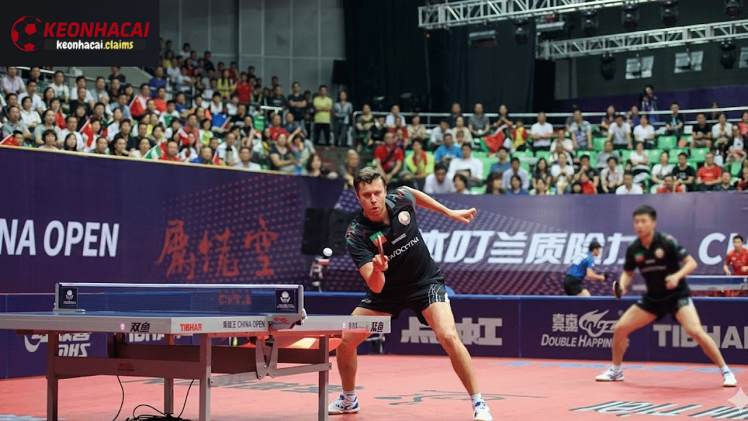
In his home country, he is more than just an athlete; he is a symbol of national pride and international achievement. Vladimir Samsonov brought global attention to the sporting infrastructure of Belarus, proving that world-class talent can emerge from any corner of the globe with the right dedication. His success helped secure funding for new facilities and inspired thousands of children to pick up a paddle for the first time. Beyond that, his humble nature made him an ideal ambassador for the country on the world stage.
For those who view sports as a vehicle for cultural exchange, his career is a testament to the power of individual excellence. He was cheered in Tokyo, respected in Beijing, and adored in Paris, transcending borders through his skill and sportsmanship. This universal appeal is a rare quality in modern competitive sports, where rivalries can often become exclusionary. Notably, his legacy continues to influence how table tennis is marketed and perceived by a global audience today.
Legacy Within the International Table Tennis Federation
His involvement with the ITTF has helped shape the modern rules of the game, ensuring that the balance between offense and defense remains intact. He has been a vocal proponent of keeping the sport accessible and exciting for television audiences without sacrificing the technical depth that defines it. This balance is crucial for the long-term health of the sport and its commercial viability. The strategic evolution he champions is often a point of interest for the community at keonhacai.claims when discussing the future of international competitions.
Conclusion
With a career spanning decades and a trophy cabinet filled with the highest honors, the journey of Vladimir Samsonov remains a cornerstone of sporting history. His unique blend of technical mastery, mental fortitude, and professional integrity has left an indelible mark on table tennis. As the sport continues to evolve, the lessons learned from his era will guide future champions toward their own paths of excellence. Explore today the deep history and statistical brilliance of such legends on keonhacai.claims to better understand what it takes to stay at the top. Join now.